The current economic crisis has made world leaders busy by searching for a way out effort to stop the 'bleeding' fatal accident due to their financial economy. Crisis rescue package was prepared with the total funds that are not half-hearted: 3.4 trillion U.S. dollars (U.S.: 700 billion dollars; English: 691 billion dollars; Germany: 680 billion dollars; Ireland: 544 billion dollars; France: 492 billion dollars; Russia: 200 billion dollars and Asian countries: 80 billion dollars (Kompas 26/10).
Indeed, until the current economic conditions continue to worsen. Index stock prices in the world stock exchange. Currency in the money market continues to ferment. Channel funds for credit to the industrial sector, infrastructure and trade began to misfire. Stagnant production process. Twenty million workers around the world threatened lay-in.
Main cause of the crisis
For the main economic crisis can be tracked from the monetary sector berkuasanya / financial (system of paper money [Fiat money], ribawi banking, capital markets, stock markets, forex [money market], etc.) on the real sector (trade and services, which are real) . Before the monetary crisis in Asia year 1997/1998, for example, in one day, the funds outstanding transactions in all the markets in the capital and money markets the world's estimated average of about 2-3 trillion U.S. dollars, or one year in approximately 700 trillion U.S. dollars . Conversely, the flow of goods in international trade in one year ranged from 7 trillion U.S. dollars. Thus, the flow of money 100 times faster than the flow of goods (Republika, 18/8/2000).
The amount of transactions that occurred in the world money markets totaling 1.5 trillion U.S. dollars in a day. Conversely, the amount of the transaction on the world trade in the real sector only 6 trillion U.S. dollars every year. Thus, the contrast is 500:6. In other words, transactions in the real sector is only about 1% of the sector's financial (Agustianto, 2007).
Meanwhile, according to Kompas September 2007, the outstanding money in foreign exchange transactions (foreign exchange) reached 1.3 trillion in the year.
This data shows that the rapid development of the financial sector increasingly melejit leave the real sector.
Economic Capitalism: Crisis Biang
Economic crisis in the world today is not the first nor the last. Can be said, history is the history of Capitalism economic crisis. Roy David and Glyn David (1996), in the book The History of Money From Ancient to the Present Day time, untangle the history of the crisis chronology of the world economy as a whole. According to both, throughout the 20th century, there have been more than 20 times of crisis that many developing countries. This means that, on average every 5 years the financial crisis that resulted in great suffering for hundreds of millions of human beings.
Economic crisis has occurred since the year 1907; followed by the economic crisis of 1923, 1930, 1940, 1970, 1980, 1990, and 1998 - 2001, even until today. In Southeast Asia alone, especially Thailand, Malaysia and Indonesia, the crisis had occurred in the years 1997-2002 to the present.
Islamic Economic System: Real Sector were
In the Islamic economy, the financial sector to follow-or-tied with the real sector. In the view of Islam, money is not the commodities (goods), but means of payment. Islamic hard reject all types of transactions, such as pseudo occurred in the money market or capital market at this time. Instead, Islam encourages international trade. Muhammad., Before becoming apostles, have become international traders since age teenagers. When the teens years, he was traded to Syam (Syria), Yemen and several Gulf countries in the region now. Then, when he became a messenger at the same time Daulah Islamiyah head of state in Medina, since the beginning of authority, Islam has business contacts with Chinese, Indian, Persian, and Roman. In fact only two centuries later (eighth century), traders have reached the European Islamic North.
Throughout the Daulah Islamiyah existence at the time of the Prophet Muhammad. rarely economic crisis (Previously it Daulah Islamic deficits, namely Hunain before the war, but paid off immediately after the war). At the time of Kekhilafahan Islam, especially the Khulafaur Rasyidin as well. At the time of Caliph Umar ibn al-Khaththab and inheritors Utsman bin Affan Budget often even experienced a surplus.
What's the secret? This is because Daulah Islamiyah monetary policy the Messenger of Allah. Kekhilafahan and Islam at the time of the caliph always associated with the real sector, especially trade.
Islamic Economic System: Ensure Welfare of the Human Race
In the economic system of Islam, prosperity is measured based on the principle to fulfill the needs of each individual community, not on the basis of supply and demand, economic growth, foreign exchange reserves, currency or index prices in the market of non-real.
Therefore, the economic system of Islam done to implement some basic principles in achieving the goals to fulfill the needs of each individual community.
1. The setting up of ownership.
Islamic economic ownership in the divided three. First: public ownership. Public ownership of all resources, both hard, liquid or gas, such as oil, iron, copper, gold and gas; including all stored in the belly of the earth, and all forms of energy, heavy industry, which also makes the energy as the main component. In this case, the only country exploring and distribute to the public, either in the form of goods and services.
Second: ownership of the country. Ownership of the country covering all property taken by countries such as taxes and all forms of trade, industry and agriculture that effort by the state, outside of public ownership. Everything is financed by the state in accordance with the interests of the country.
Third: individual ownership. This ownership can be managed by individuals in accordance with sharia law.
2. The determination of the currency system of gold and silver.
Gold and silver is the currency in the Islamic system. Removing the substitution of paper must be supported with gold and silver, with the same value and can be exchanged, when there is demand. Thus, paper money any country will not be dominated by the money of other countries. Instead, the money is intrinsically have a fixed value, and not changed.
Abandoned the currency of gold and silver and replace it with a paper currency has weakened the economy of the country. Dominance currency dollars that are not supported directly by the gold lead to the economic structure becomes very vulnerable to currency fluctuation dollars. Small shock that occurred in the United States will quickly spread to the entire world. Not only that, political turmoil will also impact on the fluctuation value of the currency and commodities as the result of money (goods) in the money market full of speculation (speculative).
3. Ribawi elimination of the banking system.
The economic system of Islam prohibits usury, both nasiah and fadhal; also set a loan to help people in need without additional (interest) from the money matter. In the Baitul Mal (cash country Daulah Islamiyah), the public can obtain loans for those in need, including farmers, without any element of usury in the lesson.
4. Pengharaman trading system in the market of non-real.
Including to the market in non-real (virtual market) is currently the market securities (securities) market to be (gold and commodities, CPO, mines and energy, etc.) and money market. The economic system of Islam forbid the sale of commodities before the goods become the property and mastered by the impressive, sacred law to sell goods that do not belong in someone. FORBIDDEN memindahtangankan valuable paper, bond and share produced from the contract, the contract falsehood. Islam also forbid all means of deception and manipulation that allowed by Capitalism, with claims of freedom of ownership.
This is the economic system of Islam that really will ensure the welfare of the people and free from the shocks of economic crisis.
This system has proven capable of creating the welfare of mankind, Muslim and non-Muslim, without having to face the economic crisis that periodically overwrite, as experienced by the economic system Capitalism.
At the time of Caliph Umar ibn al-Khaththab (13-23 H/634-644 M), for example, only 10 years in the government, welfare evenly to all over the country. At the time, in Yemen, for example, Muadz bin Jabal difficult to find a feasible that the poor are given alms (Abu Ubaid said, Al-Amwâl, Microbiol. 596). At the time, Caliph Umar ibn al-Khaththab able to hire teachers in the Medina each 15 dinar (1 dinar = 4.25 grams of gold). (Ash-Shinnawi, 2006).
Then, at the time of Caliph Umar ibn Abdul Aziz (99-102 H/818-820 M), although the Kekhilafahannya short (only 3 years old), Islam continues mengenangnya as caliph who successfully promotes the people. Yahya bin Said, an officer charity, it said, "When trying to distribute alms, I do not see a poor also. Umar bin Abdul Aziz has made every individual people at that time on easy street. "(Ibn al-Hakam samygaye, Sabah 'Umar ibn Abdul' Aziz, Microbiol. 59).
At the time, prosperity not only in Africa, but also spread evenly across the region over the Islamic Khilafah, such as Iraq and Bashrah. Once makmurnya people, the Governor Bashrah time ever send a letter to the Caliph Umar bin Abdul Aziz, "All the people prosperous life to my own fear they will become proud and arrogant." (Abu Ubaid, Al-Amwâl, Microbiol. 256).
Indeed, until the current economic conditions continue to worsen. Index stock prices in the world stock exchange. Currency in the money market continues to ferment. Channel funds for credit to the industrial sector, infrastructure and trade began to misfire. Stagnant production process. Twenty million workers around the world threatened lay-in.
Main cause of the crisis
For the main economic crisis can be tracked from the monetary sector berkuasanya / financial (system of paper money [Fiat money], ribawi banking, capital markets, stock markets, forex [money market], etc.) on the real sector (trade and services, which are real) . Before the monetary crisis in Asia year 1997/1998, for example, in one day, the funds outstanding transactions in all the markets in the capital and money markets the world's estimated average of about 2-3 trillion U.S. dollars, or one year in approximately 700 trillion U.S. dollars . Conversely, the flow of goods in international trade in one year ranged from 7 trillion U.S. dollars. Thus, the flow of money 100 times faster than the flow of goods (Republika, 18/8/2000).
The amount of transactions that occurred in the world money markets totaling 1.5 trillion U.S. dollars in a day. Conversely, the amount of the transaction on the world trade in the real sector only 6 trillion U.S. dollars every year. Thus, the contrast is 500:6. In other words, transactions in the real sector is only about 1% of the sector's financial (Agustianto, 2007).
Meanwhile, according to Kompas September 2007, the outstanding money in foreign exchange transactions (foreign exchange) reached 1.3 trillion in the year.
This data shows that the rapid development of the financial sector increasingly melejit leave the real sector.
Economic Capitalism: Crisis Biang
Economic crisis in the world today is not the first nor the last. Can be said, history is the history of Capitalism economic crisis. Roy David and Glyn David (1996), in the book The History of Money From Ancient to the Present Day time, untangle the history of the crisis chronology of the world economy as a whole. According to both, throughout the 20th century, there have been more than 20 times of crisis that many developing countries. This means that, on average every 5 years the financial crisis that resulted in great suffering for hundreds of millions of human beings.
Economic crisis has occurred since the year 1907; followed by the economic crisis of 1923, 1930, 1940, 1970, 1980, 1990, and 1998 - 2001, even until today. In Southeast Asia alone, especially Thailand, Malaysia and Indonesia, the crisis had occurred in the years 1997-2002 to the present.
Islamic Economic System: Real Sector were
In the Islamic economy, the financial sector to follow-or-tied with the real sector. In the view of Islam, money is not the commodities (goods), but means of payment. Islamic hard reject all types of transactions, such as pseudo occurred in the money market or capital market at this time. Instead, Islam encourages international trade. Muhammad., Before becoming apostles, have become international traders since age teenagers. When the teens years, he was traded to Syam (Syria), Yemen and several Gulf countries in the region now. Then, when he became a messenger at the same time Daulah Islamiyah head of state in Medina, since the beginning of authority, Islam has business contacts with Chinese, Indian, Persian, and Roman. In fact only two centuries later (eighth century), traders have reached the European Islamic North.
Throughout the Daulah Islamiyah existence at the time of the Prophet Muhammad. rarely economic crisis (Previously it Daulah Islamic deficits, namely Hunain before the war, but paid off immediately after the war). At the time of Kekhilafahan Islam, especially the Khulafaur Rasyidin as well. At the time of Caliph Umar ibn al-Khaththab and inheritors Utsman bin Affan Budget often even experienced a surplus.
What's the secret? This is because Daulah Islamiyah monetary policy the Messenger of Allah. Kekhilafahan and Islam at the time of the caliph always associated with the real sector, especially trade.
Islamic Economic System: Ensure Welfare of the Human Race
In the economic system of Islam, prosperity is measured based on the principle to fulfill the needs of each individual community, not on the basis of supply and demand, economic growth, foreign exchange reserves, currency or index prices in the market of non-real.
Therefore, the economic system of Islam done to implement some basic principles in achieving the goals to fulfill the needs of each individual community.
1. The setting up of ownership.
Islamic economic ownership in the divided three. First: public ownership. Public ownership of all resources, both hard, liquid or gas, such as oil, iron, copper, gold and gas; including all stored in the belly of the earth, and all forms of energy, heavy industry, which also makes the energy as the main component. In this case, the only country exploring and distribute to the public, either in the form of goods and services.
Second: ownership of the country. Ownership of the country covering all property taken by countries such as taxes and all forms of trade, industry and agriculture that effort by the state, outside of public ownership. Everything is financed by the state in accordance with the interests of the country.
Third: individual ownership. This ownership can be managed by individuals in accordance with sharia law.
2. The determination of the currency system of gold and silver.
Gold and silver is the currency in the Islamic system. Removing the substitution of paper must be supported with gold and silver, with the same value and can be exchanged, when there is demand. Thus, paper money any country will not be dominated by the money of other countries. Instead, the money is intrinsically have a fixed value, and not changed.
Abandoned the currency of gold and silver and replace it with a paper currency has weakened the economy of the country. Dominance currency dollars that are not supported directly by the gold lead to the economic structure becomes very vulnerable to currency fluctuation dollars. Small shock that occurred in the United States will quickly spread to the entire world. Not only that, political turmoil will also impact on the fluctuation value of the currency and commodities as the result of money (goods) in the money market full of speculation (speculative).
3. Ribawi elimination of the banking system.
The economic system of Islam prohibits usury, both nasiah and fadhal; also set a loan to help people in need without additional (interest) from the money matter. In the Baitul Mal (cash country Daulah Islamiyah), the public can obtain loans for those in need, including farmers, without any element of usury in the lesson.
4. Pengharaman trading system in the market of non-real.
Including to the market in non-real (virtual market) is currently the market securities (securities) market to be (gold and commodities, CPO, mines and energy, etc.) and money market. The economic system of Islam forbid the sale of commodities before the goods become the property and mastered by the impressive, sacred law to sell goods that do not belong in someone. FORBIDDEN memindahtangankan valuable paper, bond and share produced from the contract, the contract falsehood. Islam also forbid all means of deception and manipulation that allowed by Capitalism, with claims of freedom of ownership.
This is the economic system of Islam that really will ensure the welfare of the people and free from the shocks of economic crisis.
This system has proven capable of creating the welfare of mankind, Muslim and non-Muslim, without having to face the economic crisis that periodically overwrite, as experienced by the economic system Capitalism.
At the time of Caliph Umar ibn al-Khaththab (13-23 H/634-644 M), for example, only 10 years in the government, welfare evenly to all over the country. At the time, in Yemen, for example, Muadz bin Jabal difficult to find a feasible that the poor are given alms (Abu Ubaid said, Al-Amwâl, Microbiol. 596). At the time, Caliph Umar ibn al-Khaththab able to hire teachers in the Medina each 15 dinar (1 dinar = 4.25 grams of gold). (Ash-Shinnawi, 2006).
Then, at the time of Caliph Umar ibn Abdul Aziz (99-102 H/818-820 M), although the Kekhilafahannya short (only 3 years old), Islam continues mengenangnya as caliph who successfully promotes the people. Yahya bin Said, an officer charity, it said, "When trying to distribute alms, I do not see a poor also. Umar bin Abdul Aziz has made every individual people at that time on easy street. "(Ibn al-Hakam samygaye, Sabah 'Umar ibn Abdul' Aziz, Microbiol. 59).
At the time, prosperity not only in Africa, but also spread evenly across the region over the Islamic Khilafah, such as Iraq and Bashrah. Once makmurnya people, the Governor Bashrah time ever send a letter to the Caliph Umar bin Abdul Aziz, "All the people prosperous life to my own fear they will become proud and arrogant." (Abu Ubaid, Al-Amwâl, Microbiol. 256).


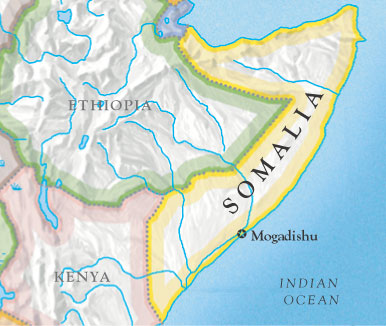 The following translation answer questions about the rover in the Gulf of Aden, which was translated from Arabic articles taken from the site Ameer Hizbut Tahrir, Or Shaykh Ibn Abu Khaleel Al-RISHTA.


 Health akan memberikan kondisi atau status “kesehatan” hardisk. Error Scan untuk memeriksa apakah ada yang rusak dengan Hardisk tersebut. Fasilitas Error scan ini yang kita manfaatkan untuk memeriksa kondisi hardisk. Agar hasilnya akurat maka jangan memeriksa dengan Quick Scan, hilangkan tanda cek di menu Quick Scan.

